
Fitting Modern Comfort Into Homes That Were Never Built for Ductwork
Older homes carry a character that newer construction rarely matches. Thick plaster walls, hand-finished trim, narrow closets, and compact floor plans all tell a story worth preserving. The trouble begins when you try to add central air conditioning to a house like this. Traditional ducted systems demand wide rectangular channels running through walls, ceilings, and soffits, and in a home that was finished long before anyone imagined forced-air cooling, there simply is no room to hide them. Tearing open walls and dropping ceilings to make space often undoes the very details that make the home special.
This is the exact problem high velocity HVAC systems were designed to solve. Instead of large ducts, these systems move conditioned air through small, flexible tubing roughly two inches in diameter that threads through existing wall cavities, between floor joists, and around framing without major demolition. At All-A-Round Air Conditioning, Heating & Refrigeration, LLC, we install these systems for homeowners who want genuine comfort without sacrificing the look and structure of a house they love. Understanding how the technology works, where it fits, and what to expect during installation helps you decide whether it belongs in your home.
How High Velocity Systems Deliver Comfort Differently
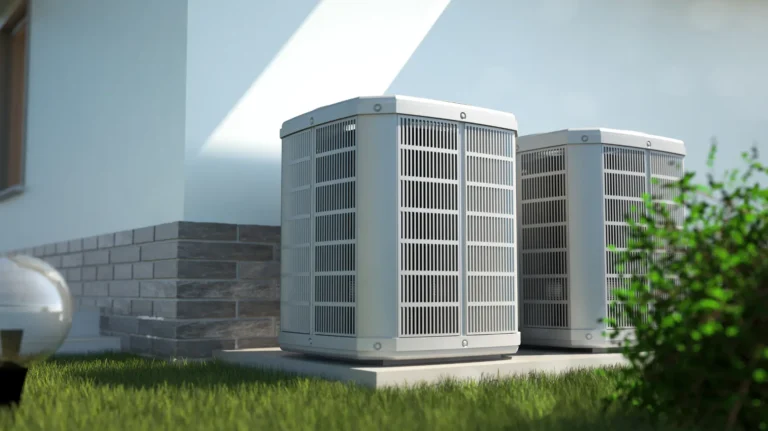
The name describes the core principle. A high velocity system pushes air through its small tubing at a far higher speed than a conventional system moves air through large ducts. A powerful air handler, paired with an outdoor condenser or heat pump, generates the pressure needed to drive air through the narrow lines. When that fast-moving air enters a room through compact outlets, it creates a gentle mixing action called aspiration. The jet of air pulls the surrounding room air into motion, blending warm and cool pockets into one even temperature from floor to ceiling.
This mixing effect is the quiet advantage of the design. Traditional systems can leave a room with a cold layer near the floor and warmer air trapped near the ceiling. Because high velocity air circulates the entire volume of a room, temperature differences from one corner to another often fall within a degree or two. The result feels more balanced than many homeowners expect, and the outlets themselves are small, round or slotted ports only a few inches across that blend into the ceiling or wall without drawing attention.
Another benefit of forcing air through narrow tubing is dehumidification. The high velocity and the cooling coil design together remove more moisture from the air than many standard systems, which matters a great deal in the humid stretches of a Texas summer. Lower indoor humidity makes a room feel cooler even at the same thermostat setting, and it discourages the damp conditions that encourage mold and musty odors.
Where These Systems Earn Their Place
High velocity HVAC is not the right answer for every project, and we never recommend a product simply because it exists. There are specific situations where this technology outperforms the alternatives, and recognizing them is part of a responsible recommendation. Throughout Wills Point, Terrell, Forney, Kaufman, and Canton, TX and the surrounding communities, we see several recurring scenarios where these systems shine.
- Historic and older homes: Properties built before central air was common often lack the chases and cavities needed for standard ductwork, making small-diameter tubing the practical path to whole-home comfort.
- Additions and renovations: When you add a room or finish an attic, extending a conventional duct trunk may be impossible, while flexible high velocity tubing can reach the new space with minimal disruption.
- Homes with limited mechanical space: Compact air handlers fit into closets, attics, or crawl spaces too small for a full-size furnace and duct system.
- Preservation-minded projects: Homeowners who refuse to alter crown molding, coffered ceilings, or original plasterwork find that small outlets protect the architectural details they value most.
We also install these systems in situations where a homeowner wants to zone comfort across levels of a multi-story home. Because the tubing is so flexible, running separate lines to upper floors and basement spaces is far easier than reconfiguring rigid ductwork. In each case, the conversation starts with a thorough evaluation of your home rather than a sales pitch for a product.
Our Installation Process From First Visit to Final Startup
A high velocity installation rewards careful planning, and we approach every job in a deliberate sequence. Skipping steps leads to noise complaints, uneven comfort, and wasted energy, so we never rush the process. All-A-Round Air Conditioning, Heating & Refrigeration, LLC was established in 2003 with the goal of delivering the best HVAC services to our customers, and that commitment shows most clearly in how methodically we handle a complex installation like this one.
The work moves through distinct stages, each building on the one before it:
- Load calculation and assessment: We measure your home, account for windows, insulation, ceiling height, and sun exposure, then calculate exactly how much heating and cooling capacity each space requires.
- Routing and layout design: We map where the air handler will sit and plan the paths the tubing will follow through existing cavities, choosing routes that minimize bends and maintain airflow.
- Equipment selection and sizing: Based on the load calculation, we select an air handler, cooling coil, and outdoor unit matched to your home rather than guessing from square footage alone.
- Tubing installation and outlet placement: We thread the flexible lines through the structure and position outlets for even coverage, keeping noise down with proper sound-attenuating materials.
- Startup, balancing, and testing: We charge the system, verify airflow at every outlet, confirm temperatures are even across each room, and walk you through operation before we leave.
Proper sizing deserves special attention. An oversized system short-cycles, wasting energy and failing to control humidity, while an undersized one runs constantly without keeping up. The load calculation we perform at the start determines everything that follows, which is why we treat it as the foundation of the entire project rather than a formality.
Technical Details Worth Knowing
The equipment behind a high velocity system is engineered to handle the greater static pressure that narrow tubing creates. The air handler uses a robust blower capable of maintaining the airflow velocity these systems depend on. The supply tubing is typically insulated and flexible, allowing it to snake through tight framing while limiting energy loss as air travels to each room. Insulated plenum ducting connects the air handler to the smaller runs, and the compact outlets at the room end are designed to deliver air without the harsh drafts you might expect from fast-moving air.
Noise control is engineered into the system rather than left to chance. Sound-attenuating tubing, strategic placement of the air handler, and careful outlet selection keep operation quiet. Modern high velocity equipment pairs with high-efficiency condensers and heat pumps, so you gain the comfort advantages without a heavy penalty on your utility bills. These systems also work well alongside air filtration and dehumidification accessories, giving you more control over indoor air quality in one integrated package.
Why Homeowners Trust Us With This Work
Keeping you comfortable all year round is what matters most to us. We strive to earn your respect and loyalty, because we believe that valuable people like you make All-A-Round one of the most trusted service companies in our area. A high velocity installation asks for experience, patience, and attention to detail, and our team of well-trained technicians and installers will go the extra mile and never cut corners to serve you.
We hope your air conditioning and heating system never breaks down, but when it does, we want to be the first company you call. Whether you are preserving a historic home, finishing an addition, or simply looking for even, quiet comfort that fits into tight spaces, All-A-Round Air Conditioning, Heating & Refrigeration, LLC is ready to evaluate your home and explain your options honestly. We treat you like our family, because you actually are, and that promise guides every system we design and install.